We are not alarmed that today's children are learning about sex and sexuality. We are all sexual beings from birth, and this is to be celebrated. Children have always been curious about sex and sexuality from an early age, and it is good for parents and schools to give them honest and age-appropriate information. However, the sexualization of childhood is having a profoundly distrubing impact on children's understanding of gender, sexuality, and relationships (Levin & Kilbourne(2009).
Personally, this article just reminded me how young children living in today's society are mislead and easy influenced by the toys, media, internet, and other children about their sexuality. I see the way some parents dress yooung girls and boys inappropriately. Most of the young girls that I work with in pre-k, wear tight jeans, high heels shoes, and booty shorts. The young boys are wearing boxers shorts for underwear, baggy pants and shorts, and oversized shirts like their daddies are wearing. This is a drastic change of dressing compared to when I was growing up as a child. The toys have changed too. Most young girls play with bratz dolls which are dressed liked adults who wear a lot of make-up, wear short dresses and skirts, and wear high-heels shoes,too. Another example would be through music that young children listen too. For example, one day during outside time in pre-k, I heard a group are girls singing and dancing to a song called "Slap them thighs". I was shock to hear and see a group of young girls singing and dancing to this type of song. When I asked the question, where did you hear and learn this song? One of the girls said, my mama and we sing and dance a lot to this song. This helped me to see that the parents in my community need to be educated on what type of music, clothes, and toys are appropriate for young children to be exposed too.
As an early childhood professional, this article on sexualization of early childhood has opened my eyes to just how much our parents and young children are depending on us as educators to help them learn and work to change this negative epidemic is hurting our children from having positive healthy experiences they need for healthy development.
Reference
Levin, D. E. & Kilbourne, J. (2009), So sexy so soon: The new sexualized childhood and what parents can do to protect their kids (pp. 1-8), New York:Ballantine Books, Retrieved from: http://dianeelevin.com/sosexysosoon/introduction.pdf
Saturday, April 7, 2012

Saturday, March 31, 2012
Evaluating Impacts on Professional Practice
Describe in detail the consequences you might expect for children adn families with who you work while you experience specific"-ism(s)" in your own life. Include specific examples either those you have and/or experiencing or ones you would anticipate.
The first ism that I experience personally is that of racism. Personally, while working professionally with white families and children, I have noticed that the white parents prefer to talk to the white teacher when they enter the classroom. In other words, the white parent ignores me completely. Therefore, when a white child enrolls in our classroom, I make sure that the white child sits at the white teacher table. I know that this is a bias that I need to learn to work on. I do not feel comfortable or feels that the parents respect me enough to want to work with their children. Also, the white children treat me the same way because the child told me that I was not her teacher anyway. This made me feel sad. I know that the parents taught the children to treat me this way. Therefore, I do my best to respect the parents and children. As an early childhood educator, I must provide the children with the best education possible.
Another ism that I have experienced is sexism where children are raised by the same-sex families. This type of family is something that goes against my upbringing because I grew up in a heterosexual family which consists of a father, mother, three sisters and one brother. When a children from the same-sex family enters the classroom, I have to remember to keep a straight face and respect this family. All families deserves to be treated equally. Therefore, I am striving to overcome this bias because I am an early childhood professional who must respect, accept, and understand the same-sex families that I encounter through my job. Although, I have no problem working with the children coming from the same-sex family, I just have to overcome my uneasiness when these parents come in the classroom to visit.
It is important that I keep working on these biases which involves racism and sexism. This is the only way I will overcome these biases. This will help me to be able to overlook all biases that will prevent me from helping all children to become productive adults.
The first ism that I experience personally is that of racism. Personally, while working professionally with white families and children, I have noticed that the white parents prefer to talk to the white teacher when they enter the classroom. In other words, the white parent ignores me completely. Therefore, when a white child enrolls in our classroom, I make sure that the white child sits at the white teacher table. I know that this is a bias that I need to learn to work on. I do not feel comfortable or feels that the parents respect me enough to want to work with their children. Also, the white children treat me the same way because the child told me that I was not her teacher anyway. This made me feel sad. I know that the parents taught the children to treat me this way. Therefore, I do my best to respect the parents and children. As an early childhood educator, I must provide the children with the best education possible.
Another ism that I have experienced is sexism where children are raised by the same-sex families. This type of family is something that goes against my upbringing because I grew up in a heterosexual family which consists of a father, mother, three sisters and one brother. When a children from the same-sex family enters the classroom, I have to remember to keep a straight face and respect this family. All families deserves to be treated equally. Therefore, I am striving to overcome this bias because I am an early childhood professional who must respect, accept, and understand the same-sex families that I encounter through my job. Although, I have no problem working with the children coming from the same-sex family, I just have to overcome my uneasiness when these parents come in the classroom to visit.
It is important that I keep working on these biases which involves racism and sexism. This is the only way I will overcome these biases. This will help me to be able to overlook all biases that will prevent me from helping all children to become productive adults.
Friday, March 16, 2012
Observing Communication
Provide an account of your observation
The other day I was in WalMart, during some shopping, I overheard a child was trying to persuade his mother to buy a new toy. The child was telling his mother that he will clean his room and do his homework for school. I could tell the mother looked at her child, she was surprised and happy that her child was offering to do this so that he could get a new toy.
What I noticed is that the mother was listening at what her son was talking about without interrupting him. According to our video: Communication with Young Children (2012), it is important to listen to children without interrupting what they are telling us. When the mother told the child in a soft voice that she did not have enough money to buy the toy today, but she will come back tommorrow to buy the toy. The child did not seem upset instead he smiled and said "thank you." The mother and child went to the counter to check out.
I believe the mother and child communicated very effectively with each other. Both of them listen effectively, used eye contact, and they both respected and accepted each other. The communication interaction affected the child in a positive way because the child did not get the toy that day, but he thanked his mother anyway. She told the child,"she will buy the game the next day."
After observing the mother and child, I learned that it is important to provide respect and listen to children without interrupting them. Now, I know this is important because doing this will give the children time to respond with comments of their own. This week assignment taught me a lot about ways of communicating with young children.
The other day I was in WalMart, during some shopping, I overheard a child was trying to persuade his mother to buy a new toy. The child was telling his mother that he will clean his room and do his homework for school. I could tell the mother looked at her child, she was surprised and happy that her child was offering to do this so that he could get a new toy.
What I noticed is that the mother was listening at what her son was talking about without interrupting him. According to our video: Communication with Young Children (2012), it is important to listen to children without interrupting what they are telling us. When the mother told the child in a soft voice that she did not have enough money to buy the toy today, but she will come back tommorrow to buy the toy. The child did not seem upset instead he smiled and said "thank you." The mother and child went to the counter to check out.
I believe the mother and child communicated very effectively with each other. Both of them listen effectively, used eye contact, and they both respected and accepted each other. The communication interaction affected the child in a positive way because the child did not get the toy that day, but he thanked his mother anyway. She told the child,"she will buy the game the next day."
After observing the mother and child, I learned that it is important to provide respect and listen to children without interrupting them. Now, I know this is important because doing this will give the children time to respond with comments of their own. This week assignment taught me a lot about ways of communicating with young children.
Saturday, March 10, 2012
Creating Affirming Environments
"The toys, materials, and equipment you put out for children;the posters, pictures, and art objects you hang on the wall; and the types of furniture and how you arrange them all influence what children learn. In addition to seeing themselves in their learning environment, children also need materials that honor diversity both within and beyond their own identity groups (Derman-Sparks & Edwards, 2010).
If I were to open my own family child care home, it would be a loving, caring, and happy environment. The transition would be the first room where the children can take time to say goodbye to their parents. In the learning video,Welcome to an Anti-Bias Learning Community, (Laureate, Education 2012). the transition room is a great place for children to gather themselves emotionally before they go into the center. In the transition room,on the walls it will have pictures of colorful butterflies and flowers. On the tables, picutres of the families and children will be displaced throughout the room. Also, their will be a variety of age appropriate books to read,such as, big books for young children. In addition, there will be crayons and paper, too. Finally, in the transition room parents' information wall which will include weekly menus, monthly news letter, calendar, and sign in and out sheets.
The Learning room is where the learning will start with the walls decorated with rainbow colors all around the room. A big sign with the word Welcome hanging on the wall. Music is playing soflty in the background. In the circle area where the children will sit a rug with letters of the alphabets displayed in English and another language is a great way to help children learn letters of the alphabets in another language. The room will be divided into different areas such as, science, house, sand/table,writing, reading, blocks, computer, art, and manipulatives. I would have a table where all the children can bring something special they would like to display about their families.
The sleeping room is where I would have decorated with stars and moons on the walls and from the ceiling. Hopefully, the children will feel at home and comfortable to sleep while listening to soft music playing. Also, I will use night lights, too.
Parents are you ready for me to love and care for your children? You have found the right place!
References:
Derman-Sparks, L. & J.O.(2010), Anti-Bias Education, for Young Children and Ourselves, Washington, DC: National Association for the Education for Young Children (NAEYC)
Laureate, Education (2012), Welcome to an Anti-Bias Learning Community (2012),

If I were to open my own family child care home, it would be a loving, caring, and happy environment. The transition would be the first room where the children can take time to say goodbye to their parents. In the learning video,Welcome to an Anti-Bias Learning Community, (Laureate, Education 2012). the transition room is a great place for children to gather themselves emotionally before they go into the center. In the transition room,on the walls it will have pictures of colorful butterflies and flowers. On the tables, picutres of the families and children will be displaced throughout the room. Also, their will be a variety of age appropriate books to read,such as, big books for young children. In addition, there will be crayons and paper, too. Finally, in the transition room parents' information wall which will include weekly menus, monthly news letter, calendar, and sign in and out sheets.
The Learning room is where the learning will start with the walls decorated with rainbow colors all around the room. A big sign with the word Welcome hanging on the wall. Music is playing soflty in the background. In the circle area where the children will sit a rug with letters of the alphabets displayed in English and another language is a great way to help children learn letters of the alphabets in another language. The room will be divided into different areas such as, science, house, sand/table,writing, reading, blocks, computer, art, and manipulatives. I would have a table where all the children can bring something special they would like to display about their families.
The sleeping room is where I would have decorated with stars and moons on the walls and from the ceiling. Hopefully, the children will feel at home and comfortable to sleep while listening to soft music playing. Also, I will use night lights, too.
Parents are you ready for me to love and care for your children? You have found the right place!
References:
Derman-Sparks, L. & J.O.(2010), Anti-Bias Education, for Young Children and Ourselves, Washington, DC: National Association for the Education for Young Children (NAEYC)
Laureate, Education (2012), Welcome to an Anti-Bias Learning Community (2012),

Saturday, February 25, 2012
Art Gallery- What I Have Learned
One hope that you have when think about working with children and families from diverse backgrounds
I hope all children and families can learn to accept, respect, and understand each other. All children and families deserve to live in a world where we all can be as one.
One goal I would like to set for the early childhood field related to issues of diversity, equity, and social justice
All educators, working in the anti-bias education needs to be properly trained and this will help the families and children in the diversal family.
I want to thank all my colleagues for helping me to expand my knowledge in this class. Reading all your discussions and blogs has helped me tremendously in this class. I am looking forward to continue working and learning with all of you in the next class.
I hope all children and families can learn to accept, respect, and understand each other. All children and families deserve to live in a world where we all can be as one.
One goal I would like to set for the early childhood field related to issues of diversity, equity, and social justice
All educators, working in the anti-bias education needs to be properly trained and this will help the families and children in the diversal family.
I want to thank all my colleagues for helping me to expand my knowledge in this class. Reading all your discussions and blogs has helped me tremendously in this class. I am looking forward to continue working and learning with all of you in the next class.
Monday, February 20, 2012
Creating Art
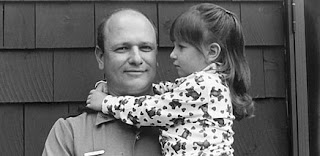
After reading the resources in this class, it has helped me to keep an open mind and same sex families should not be discrimnated against because of their race, religion, econominc status, gender, or ethnic backgrounds. In other other words, all families are special because of love, support, respect, and trust for each other. In the end, children just need love and support from family members. It does not have to be from a male and a female.




Saturday, February 11, 2012
Start Seeing Diversity Blog: "We Don't Say Those Words in Class!"
A time when you witnessed an adult (or yourself) reprimand or silence a child after he or she pointed out someone they saw as different
It happen when I took my five year old niece to the grocery store. She said in a loud voice "why is that woman dressed like a man?" I grabbed my niece and quickly left the grocery store. I told her that it was not nice to say things like that because it would hurt people feelings. Next time, when she someone looks different it would be best to ask me and I will tell you. Please use your inside voice.
What messages might have been communicated to this child by the adult's response
It is not nice to scream or say things that might hurt someone's feelings because they look or act different. Now that my niece is older, she tells her younger cousin, it is not nice to say bad things about people because it will hurt their feelings.
An example of how an anti-bias educator might have responded to support the child's (or classroom's) understanding
The anti-bias educator would have took the time to address the issue in a calmer way without leaving the store in a hurry. The anti-bias educator would listen to the child and ask questions about why and how she knew the woman was dress like a man. It would be a good time to use a book about lesbians and Gays. Hopefully, this would be a positive and healthy way to introduce this child about different lifestyles of men and women.
It happen when I took my five year old niece to the grocery store. She said in a loud voice "why is that woman dressed like a man?" I grabbed my niece and quickly left the grocery store. I told her that it was not nice to say things like that because it would hurt people feelings. Next time, when she someone looks different it would be best to ask me and I will tell you. Please use your inside voice.
What messages might have been communicated to this child by the adult's response
It is not nice to scream or say things that might hurt someone's feelings because they look or act different. Now that my niece is older, she tells her younger cousin, it is not nice to say bad things about people because it will hurt their feelings.
An example of how an anti-bias educator might have responded to support the child's (or classroom's) understanding
The anti-bias educator would have took the time to address the issue in a calmer way without leaving the store in a hurry. The anti-bias educator would listen to the child and ask questions about why and how she knew the woman was dress like a man. It would be a good time to use a book about lesbians and Gays. Hopefully, this would be a positive and healthy way to introduce this child about different lifestyles of men and women.
Subscribe to:
Posts (Atom)